History
Since its founding in 1923, Fuji Electric has built a legacy of innovation, reliability, and engineering excellence that continues to power industries around the world today. Established through a partnership between Japan’s Furukawa Electric and Germany’s Siemens, Fuji Electric has spent more than a century advancing technologies that support industrial growth, infrastructure development, energy management, and automation. From early electrical equipment and power systems to today’s advanced drives, semiconductors, automation technologies, critical power solutions, and energy infrastructure products, Fuji Electric remains focused on delivering world-class products engineered for your projects.
1923-1944
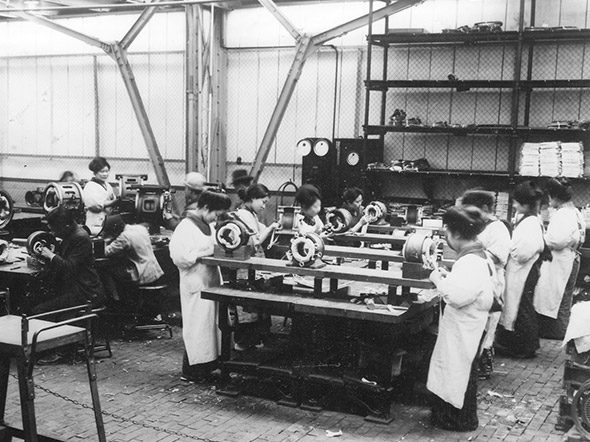
In August 1923, our predecessor, Fuji Electric Manufacturing Co., Ltd., was established through a capital and technical partnership between Furukawa Electric of Japan and Siemens of Germany. As Japan modernizes its industry, we contribute by providing motors, transformers, generators, circuit breakers, and measuring instruments. This facilitated mechanization in the mining, steel, and chemical sectors and helped stabilize the electric power supply.
1945-1973
Supported economic growth through technology
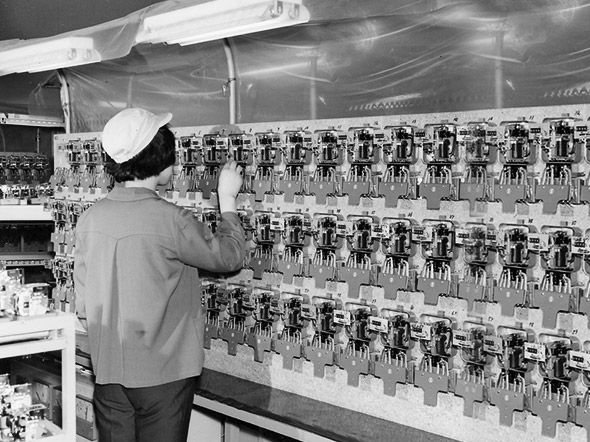
We produced general-purpose electric motors, watt-hour meters, and other equipment for postwar reconstruction. To meet the increasing demand for power driven by economic growth, we have taken on the challenge of scaling up hydro power plants and thermal power stations, as well as manufacturing facilities for Japan’s first nuclear power station. We also released transformers and circuit breakers for substation and distribution facilities that had been enlarged. We supplied measurement and control equipment to steel works and water and sewage treatment facilities to automate operations. We supplied compact, lightweight, high-performance drive units for the 1st-generation Shinkansen to support transportation growth. We also offered home appliances, and their heating and cooling technology led to the manufacturing of beverage vending machines.
1974-1991
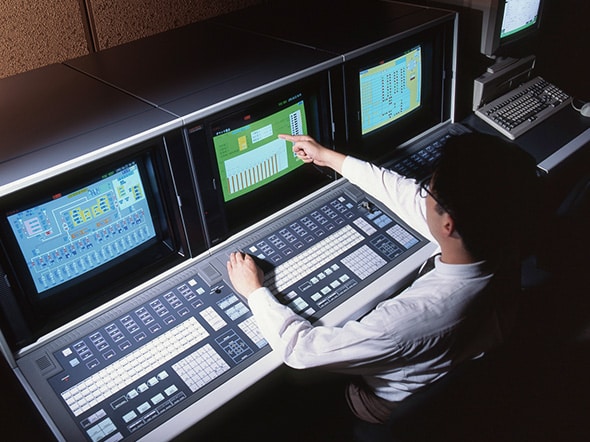
The first oil crisis increased interest in new energy sources, energy conservation, and productivity improvement. We developed solar cells and fuel cells and received our first order for overseas geothermal power-generation equipment. We advanced our core power electronics technology and provided many inverters and power electronics products equipped with our unique power semiconductors, including power transistors. We began manufacturing in 1975 and have contributed to energy savings. Our automation systems, such as the world’s first EIC-integrated control system (*), largely helped develop the industry.
-
*An integrated system that combines three control systems: electrical (E), instrumentation (I), and computer (C)
1992-2012
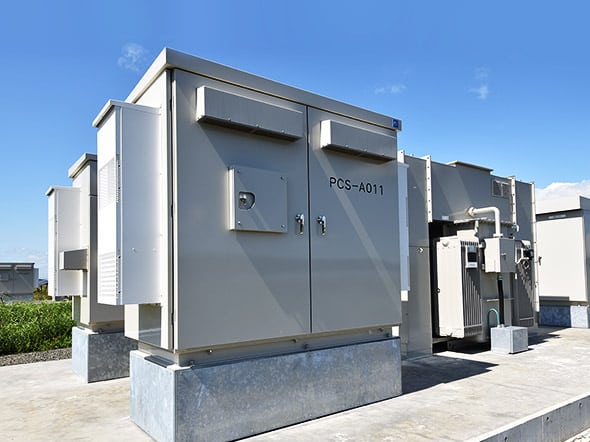
New challenges arose with the burst of Japan’s bubble economy and the necessity to reduce greenhouse gas emissions. We established our Basic Policies on Environmental Protection in 1992 to promote the development of new environmentally friendly products and technologies. In 2002, we released an environmentally friendly C-GIS that did not use SF6. In the same year, our phosphoric acid fuel cell won the New Energy Award. We developed power conditioning systems for mega solar power plants designed for the 2012 FIT (*) to reduce the environmental load of products.
-
*Feed-in Tariff Scheme for Renewable Energy
2013-
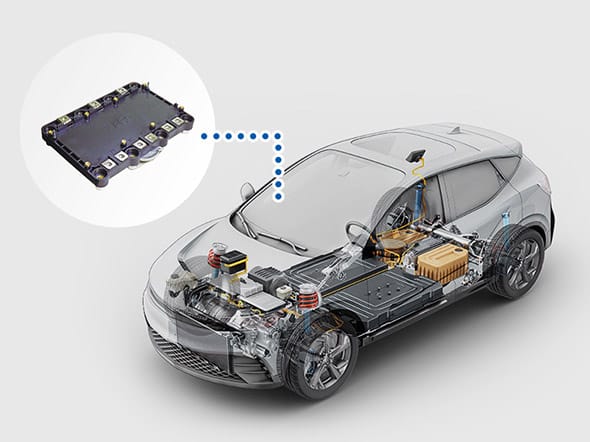
As part of the global effort to combat climate change, we launched a large-capacity UPS for data centers and a main power converter for the Shinkansen, both of which use our energy-efficient power semiconductors. We also provide power semiconductors to the EV and renewable energy sectors. We also use IoT and AI to make factories smarter, stabilize operations,and save energy. We use virtual power plant (VPP) technology to stabilize power supply and make power infrastructure more resilient.