
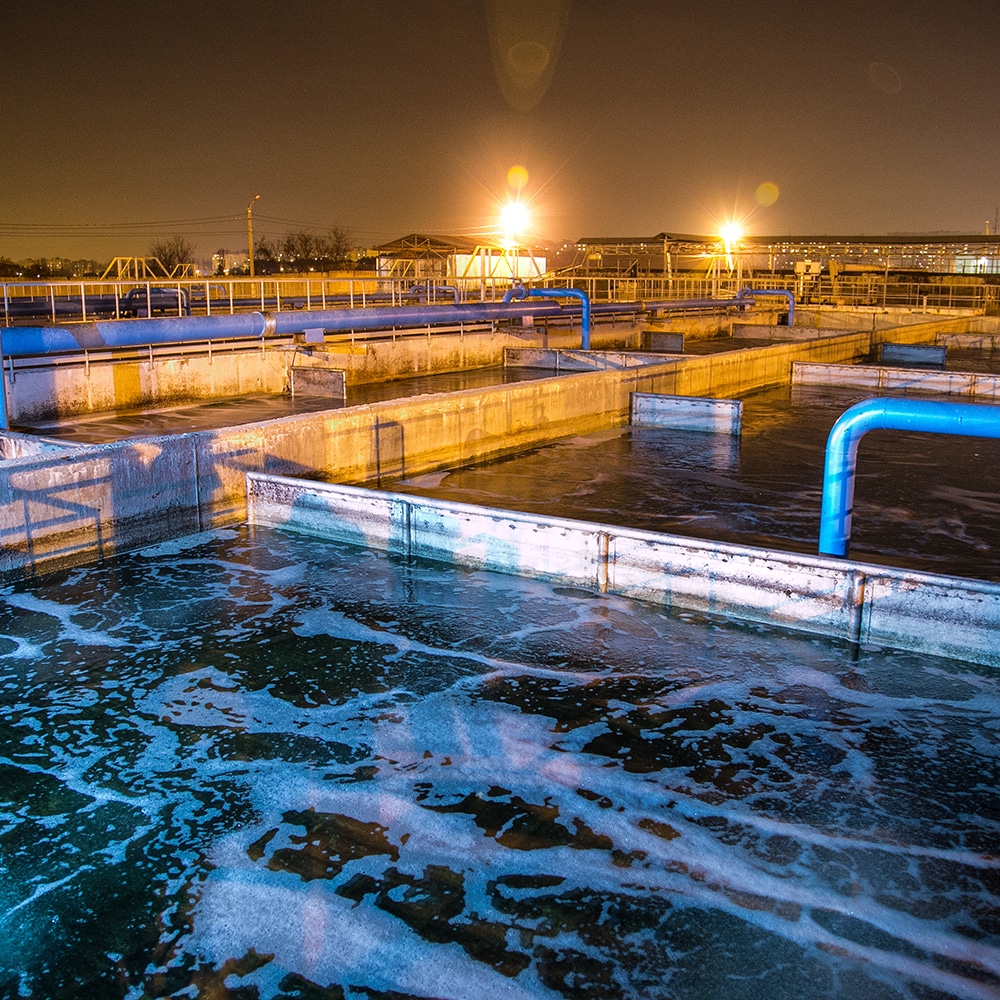
Smarter control. Lower energy costs. More reliable operations.
Why AC Drives Matter in Wastewater
Wastewater facilities operate around the clock, with pumps, blowers, and mixers consuming a significant portion of total energy. Integrating AC drives (variable frequency drives) allows operators to precisely match motor speed to demand—reducing waste, improving process control, and extending equipment life.
Key Applications
- Pumping Systems (Influent, Effluent, Sludge Transfer)
AC drives adjust pump speed based on real-time flow conditions, eliminating inefficient throttling and reducing mechanical wear. - Aeration Blowers
Aeration is one of the most energy-intensive processes in treatment plants. Drives optimize airflow to maintain proper dissolved oxygen levels without over-aerating. - Mixers & Agitators
Consistent, controlled mixing improves treatment efficiency while minimizing energy consumption and motor stress.
Core Benefits
Energy Savings (Up to 30–50%)
By reducing motor speed during low-demand periods, AC drives significantly cut electricity usage—especially in variable-load applications like pumping and aeration.
Improved Process Control
Fine-tuned speed control enables better management of flow rates, pressure, and oxygen levels—leading to more stable and efficient treatment outcomes.
Reduced Maintenance & Downtime
Soft start/stop functionality minimizes mechanical shock, reducing wear on motors, bearings, and piping systems.
Extended Equipment Life
Lower operating stress translates into longer lifespans for critical infrastructure.
Lower Operating Costs
Energy savings combined with reduced maintenance delivers measurable ROI over time.
Advanced Capabilities
- Remote Monitoring & Automation Integration
Seamlessly connect with SCADA or building management systems for centralized control. - Rugged Environmental Design
Built to handle high humidity, corrosive environments, and temperature extremes common in wastewater facilities. - Custom Logic & System Simplification
Modern drives can replace external relays, timers, and controllers—streamlining system architecture.
Where to Prioritize Deployment
- Facilities with aging constant-speed motors
- Systems using mechanical throttling or bypass valves
- Plants facing rising energy costs or capacity constraints
- Operations seeking compliance with energy or sustainability goals
AC drives transform wastewater operations from reactive to optimized—delivering immediate energy savings, tighter process control, and long-term reliability.