
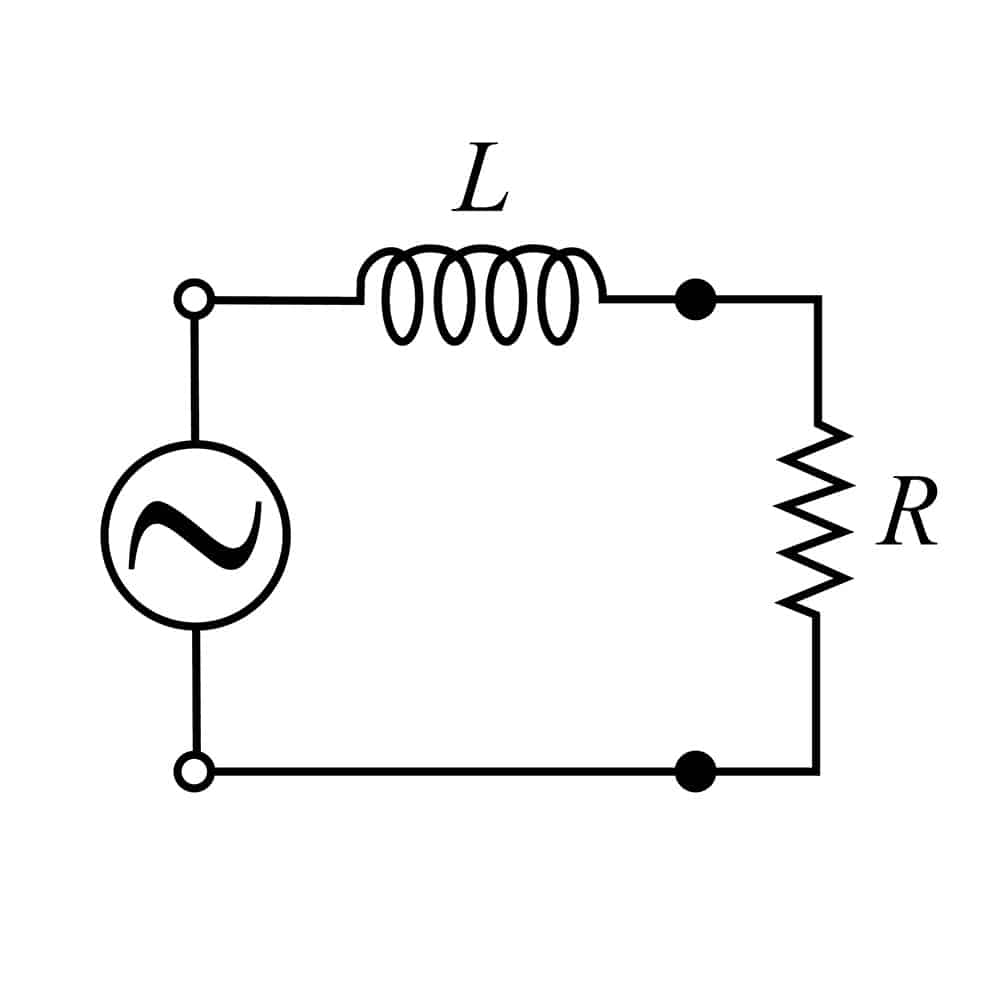
Sizing a contactor isn’t just “match the amps.” Inductive loads (motors, transformers, solenoids) create inrush current and switching transients that are much harder on contacts than resistive loads (heaters, incandescent lamps). The right way to size a contactor is to size to the utilization category / duty and the real switching conditions, not just steady-state current.
Step 1: Identify the load type and what you’re switching
Resistive loads (easy on contacts)
Examples: electric heaters, ovens, radiant elements
- Current is close to steady-state immediately
- Power factor ~1
- Minimal inrush (except some lamps)
Inductive loads (hard on contacts)
Examples: motors, compressors, transformers, solenoids
- High inrush / locked-rotor current
- Lower power factor
- Arcing is worse at opening; contact wear increases
Also note how you’re switching:
- Making current (closing) can cause weld risk under high inrush
- Breaking current (opening) can cause heavy arcing under inductive loads
- Jogging/inching (rapid cycling) is especially abusive
Step 2: Use the correct utilization category (IEC) or duty rating (NEMA)
This is the single biggest “do it right” factor.
IEC (common in modern spec sheets)
- AC-1: non-inductive / slightly inductive (resistive heating)
- AC-3: squirrel-cage motor starting + stopping while running (typical motor duty)
- AC-4: inching/jogging, plugging (very severe motor duty)
Rule of thumb:
A contactor that’s “40 A AC-1” might be only “18–25 A AC-3” for motor duty at the same voltage.
NEMA (common in North America)
NEMA sizes (00, 0, 1, 2, 3…) bundle conservative motor-duty assumptions. If you specify by NEMA size, you’re largely specifying for inductive motor service.
Step 3: Calculate the current you should size to
- A) Resistive load sizing (AC-1)
- Find heater current:
I = P / V (single-phase)
I = P / V (3-phase)
- Apply margin for continuous duty and enclosure temperature:
- Typical: 1.25× for continuous heating loads (and/or per code/internal standard)
- Add more margin if ambient is hot, panel is crowded, or switching is frequent
Practical target: pick a contactor with AC-1 rating ≥ 125% of steady current.
Example: 12 kW heater @ 240 V 1φ
- I = 12,000 / 240 = 50 A
- 125% → 62.5 A → choose ~65 A AC-1 contactor
- B) Inductive load sizing (motor / AC-3, AC-4)
For motors, start with motor FLA (from the nameplate). Then size by duty category and starting method:
1) Standard motor start/stop (AC-3)
- Choose contactor with AC-3 current rating ≥ motor FLA at the motor voltage
- If high cycling, high ambient, or poor power factor → add margin
2) Inching/jogging or plugging (AC-4)
- Don’t “add a little margin”—you often need a much larger contactor, or a different control approach
- AC-4 ratings are significantly lower than AC-3 at the same frame size
3) High inrush loads
- Motors: inrush can be 5–8× FLA (or higher) at start
- Solenoids/transformers: inrush can be 10–15× momentarily
A properly rated motor-duty contactor is designed to tolerate this—if you selected the correct AC category.
Example: 15 HP, 460 V, 3φ motor (nameplate FLA ~ 21 A-ish; use actual nameplate)
- Select contactor where AC-3 ≥ 21 A at 460 V
- If jogging/inching → choose based on AC-4 (likely a larger frame)
Step 4: Confirm the “hidden” specs that cause failures
Electrical life vs mechanical life
- Resistive loads typically allow longer electrical life
- Inductive loads shorten electrical life drastically
Check switching frequency and required service life.
Coil voltage and control scheme
- Correct coil voltage (120 VAC, 24 VDC, etc.)
- For DC coils: ensure proper suppression (or use built-in) to protect PLC outputs
Short-circuit protection and coordination
A contactor’s survival in a fault depends on upstream protection and coordination:
- Verify SCCR (short-circuit current rating) for the assembly
- Check manufacturer coordination tables (contactor + fuse/breaker)
Ambient temperature and enclosure
Heat derates contactors. If your panel runs hot, upsize or provide ventilation.
Quick “cheat sheet”
Resistive (heaters, AC-1):
- Size to steady current × 1.25
- Watch ambient heat and cycling rate
Inductive (motors, AC-3):
- Size to motor FLA at voltage using AC-3 rating
- Add margin for frequent starts/thermal environment
Severe motor duty (AC-4):
- Expect to upsize significantly
- Consider soft starters/VFDs to reduce abuse
Most common sizing mistakes
- Using AC-1 amps for motor duty
- Ignoring AC-4 when there’s jogging/inching
- Not checking SCCR/coordination with the protective device
- Forgetting temperature derating in a hot enclosure