
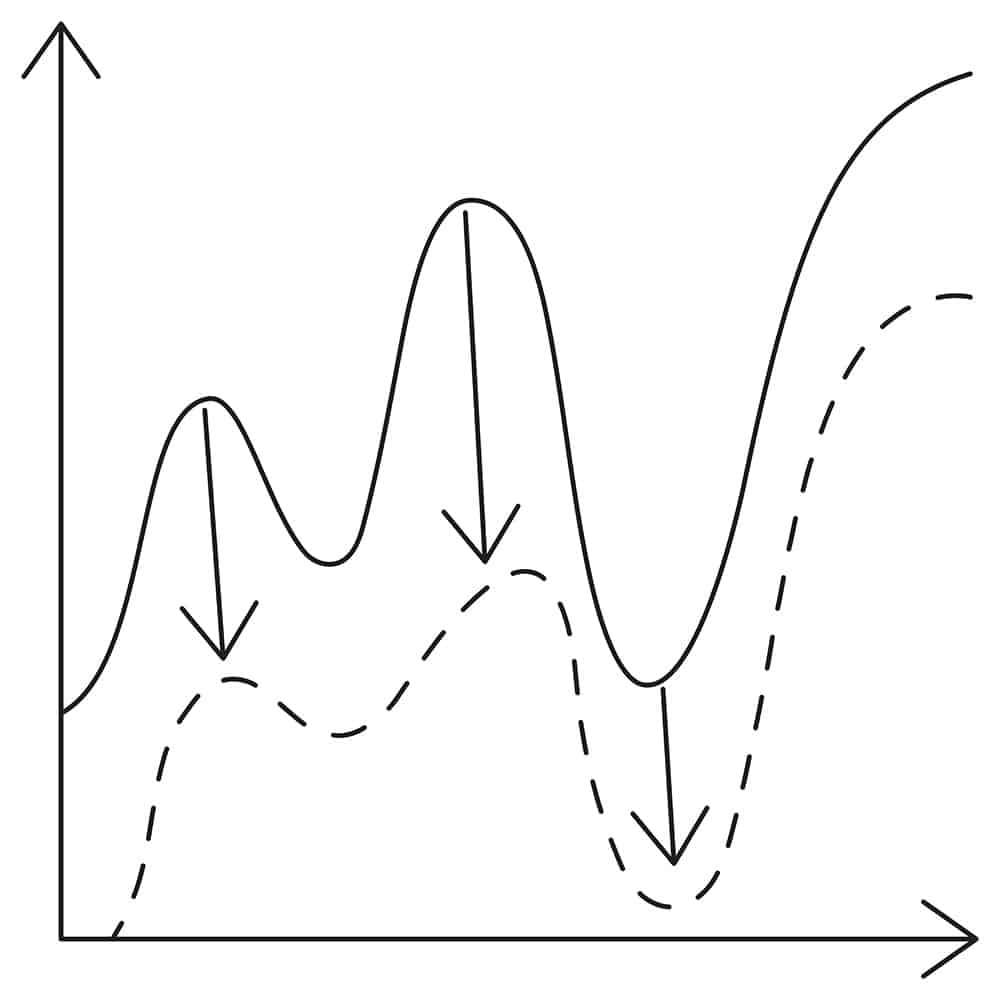
Pressure transmitters are expected to deliver reliable, accurate measurements year after year—even in harsh industrial environments. Yet over time, many instruments slowly deviate from their original calibration. This phenomenon, known as sensor drift, is unavoidable to some degree—but modern pressure transmitters are far better at detecting, correcting, and compensating for it than earlier generations.
Understanding why drift occurs—and how today’s transmitters fight it—can help reduce maintenance costs, prevent bad process decisions, and improve long-term system reliability.
What Is Sensor Drift?
Sensor drift is a gradual change in a pressure transmitter’s output that is not caused by an actual change in process pressure. It typically shows up as:
- Zero drift – output shifts when pressure is at zero
- Span drift – gain changes across the measurement range
- Non-linear drift – distortion at specific pressure points
Unlike sudden failure, drift is subtle—and dangerous precisely because it often goes unnoticed.
Why Sensor Drift Happens
- Mechanical Stress and Material Fatigue
Pressure sensors rely on diaphragms or sensing elements that flex under load. Repeated pressure cycling—especially near the upper range—causes microscopic mechanical changes over time.
Common contributors
- High cycle counts
- Pressure spikes or pulsation
- Operation near maximum rated pressure
- Temperature Effects
Temperature is one of the largest drivers of drift.
- Sensor materials expand and contract
- Electronics change characteristics with heat
- Outdoor or process-adjacent installations see wide swings
Without compensation, even a stable pressure can appear to “move” as ambient or process temperature changes.
- Aging of Electronic Components
Resistors, amplifiers, and reference elements naturally drift as they age. This is especially true in older analog designs with limited self-correction capability.
- Process and Environmental Exposure
Harsh environments accelerate drift:
- Corrosive or dirty process media
- Moisture ingress
- Vibration and mechanical shock
- EMI and electrical noise
Even a well-designed sensor will drift faster if its environment is hostile.
- Installation and Mounting Stress
Improper mounting can introduce mechanical strain into the sensor body, subtly biasing the measurement.
Examples include:
- Over-tightened fittings
- Misaligned impulse lines
- Pipe stress transferred into the transmitter housing
How Modern Pressure Transmitters Compensate for Drift
The good news: modern pressure transmitters are designed with drift in mind—and actively work to minimize its impact.
- Digital Temperature Compensation
Modern transmitters use embedded microprocessors to apply real-time temperature correction.
How it works
- Factory calibration across multiple temperature points
- Internal temperature sensors track real conditions
- Algorithms dynamically adjust the pressure signal
This dramatically reduces both zero and span drift caused by temperature variation.
- Advanced Sensor Materials and Construction
Newer sensing elements are built from materials with:
- Lower hysteresis
- Improved elastic stability
- Better resistance to fatigue
Techniques such as laser-welded diaphragms and monolithic sensor designs reduce long-term mechanical drift.
- Digital Signal Processing (DSP)
Instead of raw analog outputs, modern transmitters digitize the sensor signal early and apply filtering and correction digitally.
Benefits
- Reduced noise and EMI sensitivity
- Stable long-term gain characteristics
- Improved repeatability over time
- Auto-Zero and Self-Diagnostics
Many smart transmitters continuously monitor their own behavior.
They can:
- Detect abnormal offset changes
- Flag drift beyond acceptable limits
- Alert operators before accuracy degrades significantly
Some systems even support in-situ zero trimming without removing the transmitter from service.
- Long-Term Stability Specifications
Modern datasheets increasingly focus on long-term stability (e.g., ±0.1% URL over 5 or 10 years) rather than just initial accuracy.
This reflects real-world performance—not just lab conditions on day one.
Drift vs. Accuracy: A Common Misconception
A transmitter can be highly accurate when calibrated but still drift significantly over time. The most valuable instruments combine:
- High initial accuracy
- Excellent long-term stability
- Robust compensation algorithms
It’s stability—not just accuracy—that determines recalibration intervals and lifecycle cost.
Practical Ways to Minimize Drift in the Field
- Select transmitters with strong long-term stability specs
- Avoid operating continuously at maximum pressure
- Install with proper mechanical support and alignment
- Protect transmitters from extreme temperature swings
- Leverage diagnostics and calibration alerts
The Bottom Line
Sensor drift is inevitable—but unmanaged drift is optional.
Modern pressure transmitters use digital compensation, smarter electronics, and improved materials to dramatically reduce drift and extend calibration intervals. The result is more reliable data, fewer maintenance interventions, and better process control over the life of the instrument.