
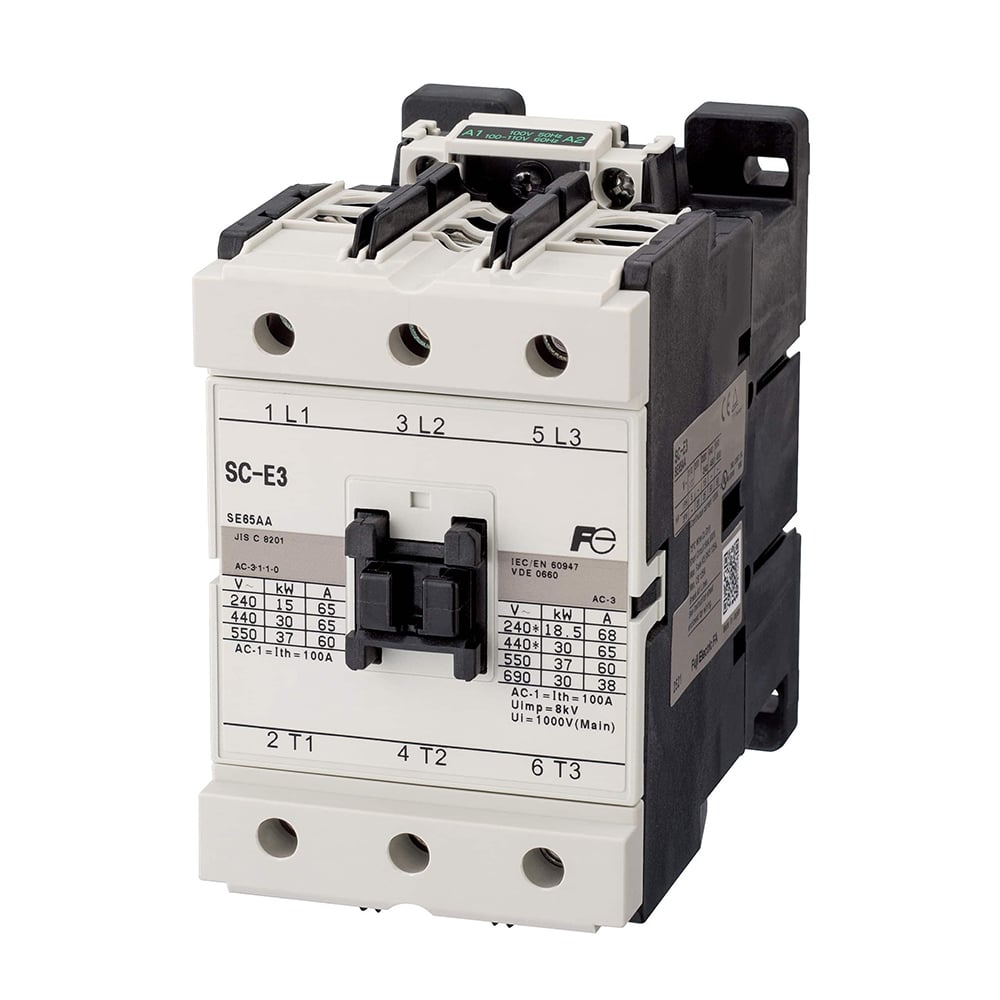
When specifying contactors and motor starters, most attention goes to current ratings, horsepower, and application type. But one critical detail often gets overlooked: coil voltage.
The coil is what energizes the device—closing contacts, starting motors, and enabling system operation. Selecting the wrong coil voltage can lead to unreliable performance, premature failure, or even safety issues.
What Is Coil Voltage?
Coil voltage is the control voltage required to energize the electromagnetic coil inside a contactor or starter. When voltage is applied:
- The coil generates a magnetic field
- The contacts close (or open, depending on design)
- Power flows to the load (like a motor)
Common coil voltages include:
- 24V (AC/DC) – Often used in control circuits and PLC systems
- 120V AC – Common in North American industrial and commercial systems
- 208–240V AC – Used in higher-voltage control applications
- 480V AC – Found in heavy industrial environments
How a Contactor Coil Works
When the correct coil voltage is applied:
- The coil energizes and creates a magnetic field
- The armature is pulled in
- The main contacts close, allowing current to flow
If the voltage is incorrect or unstable, this process can fail—or behave unpredictably.
Why Coil Voltage Matters
- Reliable Operation
Contactors are designed to operate within a specific voltage range (typically ±10%).
- Undervoltage can cause:
- Chattering (rapid on/off switching)
- Failure to pull in
- Overheating due to partial engagement
- Overvoltage can cause:
- Excess heat buildup
- Insulation breakdown
- Premature coil failure
The result: downtime, maintenance issues, and reduced equipment life.
- Control System Compatibility
Your coil voltage must match your control system:
- PLC-based systems → typically 24V DC
- Building automation systems (BAS) → often 24V AC
- Legacy or simple controls → commonly 120V AC
Choosing the wrong coil voltage can require:
- Additional transformers
- Relays or interface devices
- More complex wiring
Keeping voltages aligned simplifies design and reduces cost.
- Safety Considerations
Lower control voltages (like 24V) are often preferred because they:
- Reduce shock risk
- Improve safety for technicians
- Are better suited for wet or exposed environments
Higher voltages (120V–480V):
- May be acceptable in enclosed panels
- Require stricter safety practices
Matching coil voltage to the environment is critical for safe operation.
- Energy Efficiency and Heat Management
Even though coils draw relatively low power, they are often energized for long periods.
- Incorrect voltage = increased heat
- Excess heat = reduced lifespan
Modern systems may use:
- DC coils with electronic control
- Energy-saving coils that reduce holding current after pull-in
These features improve efficiency and reliability—but only when properly specified.
- System Stability and Noise Reduction
Improper coil voltage can lead to:
- Audible humming or buzzing
- Mechanical wear from vibration
- Inconsistent operation
This is especially important in:
- Commercial buildings
- Healthcare facilities
- Noise-sensitive environments
Common Mistakes to Avoid
- Assuming coil voltage matches line voltage
(They are often different—control vs power circuits)
- Ignoring voltage drop in long control runs
(Especially with 24V systems)
- Mixing AC and DC coils incorrectly
(They are not interchangeable)
- Not checking frequency (50/60 Hz)
(Important for AC coils)
- Overlooking replacement compatibility
(Field replacements must match coil specs exactly)
Practical Example
Imagine a facility upgrading to a PLC-based control system:
- Existing contactors: 120V AC coils
- New control system: 24V DC outputs
Without matching coil voltage:
- You’ll need interposing relays
- Wiring complexity increases
- Failure points multiply
Instead, selecting contactors with 24V DC coils:
- Simplifies integration
- Improves reliability
- Reduces installation cost
How to Select the Right Coil Voltage
When specifying contactors or starters, ask:
- What is the available control voltage?
- Is the system PLC or relay-based?
- What are the safety requirements?
- What is the environment (industrial, commercial, outdoor)?
- Will there be voltage drop over distance?
Bringing It All Together
Coil voltage may seem like a small detail—but it plays a big role in how your system performs.
Choosing the correct coil voltage ensures:
- Reliable operation
- Seamless integration with control systems
- Improved safety
- Longer equipment life
Final Thought
In electrical systems, the smallest components often have the biggest impact.
Get the coil voltage right, and your contactors and starters will perform exactly as intended—every time.