
Protect performance. Extend equipment life. Avoid unplanned downtime.
Why Heat Management Matters
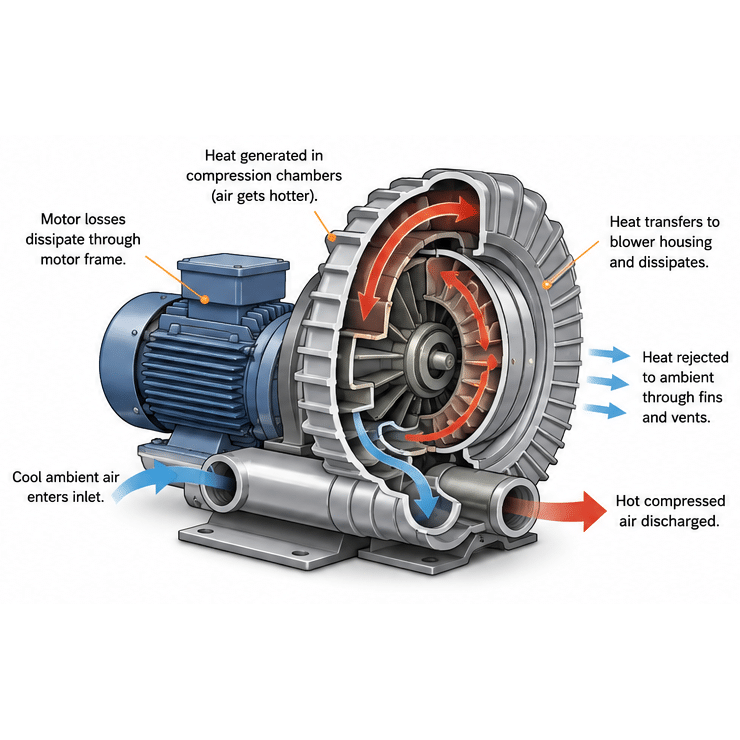
Regenerative blowers (side-channel blowers) generate heat as a natural byproduct of compressing and recirculating air. Without proper thermal control, excess heat can reduce efficiency, damage components, and shorten equipment lifespan.
Where the Heat Comes From
Compression & Recirculation
Air is repeatedly accelerated and compressed within the blower’s side channel. Each pass increases temperature—especially at higher pressure differentials.
Key driver: Higher pressure = more compression cycles = more heat.
Motor Losses
Electrical losses in the motor (I²R losses, core losses) convert energy into heat.
Key driver: Continuous operation near full load or poor ventilation.
Friction & Mechanical Resistance
Bearings and airflow resistance contribute to additional heat buildup.
Key driver: Worn components or improper lubrication.
Ambient Conditions
High surrounding temperatures or confined spaces limit heat dissipation.
Key driver: Poor airflow, enclosed installations, or hot environments.
Effects of Excess Heat
- Reduced Efficiency: Hot air is less dense, lowering blower performance
- Thermal Expansion: Can affect internal clearances and increase wear
- Seal & Bearing Degradation: Accelerates failure rates
- Motor Overheating: Leads to insulation breakdown and shortened lifespan
- Unexpected Shutdowns: Thermal protection trips interrupt operations
Best Practices for Heat Management
- Operate Within Design Limits
Avoid exceeding rated pressure or vacuum levels.
- Stay within manufacturer performance curves
- Oversizing or undersizing can both increase thermal stress
- Ensure Proper Ventilation
- Install blowers in well-ventilated areas
- Maintain adequate clearance around the unit
- Avoid enclosed or heat-trapping environments
- Use Intake Air Management
- Draw in cooler ambient air when possible
- Avoid recirculating hot discharge air back into the intake
- Consider ducting to isolate intake and exhaust paths
- Implement Variable Speed Control
Using AC drives allows the blower to match output to demand.
- Reduces unnecessary high-speed operation
- Minimizes heat generation during partial load conditions
- Improves overall system efficiency
- Monitor Temperature & Performance
- Install temperature sensors on bearings and motor housings
- Track trends to identify early signs of overheating
- Integrate with HMI/SCADA for alerts and diagnostics
- Maintain Critical Components
- Regularly inspect and service bearings
- Ensure proper lubrication
- Clean filters and air pathways to prevent restriction
- Consider Thermal Protection & Accessories
- Thermal overload protection for motors
- Cooling accessories (fans, heat shields, or enclosures) where needed
- High-temperature-rated components for demanding environments
Where Heat Management is Most Critical
- Wastewater aeration systems
- Pneumatic conveying
- Industrial drying processes
- Continuous-duty applications with high-pressure demand
Heat is inevitable in regenerative blowers—but excessive heat is not. With proper design, operation, and maintenance, you can control thermal buildup, protect your equipment, and ensure reliable performance.