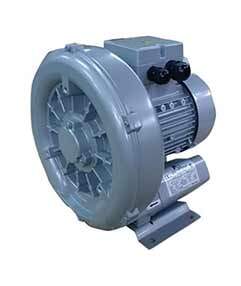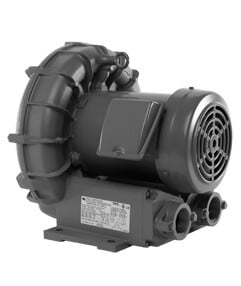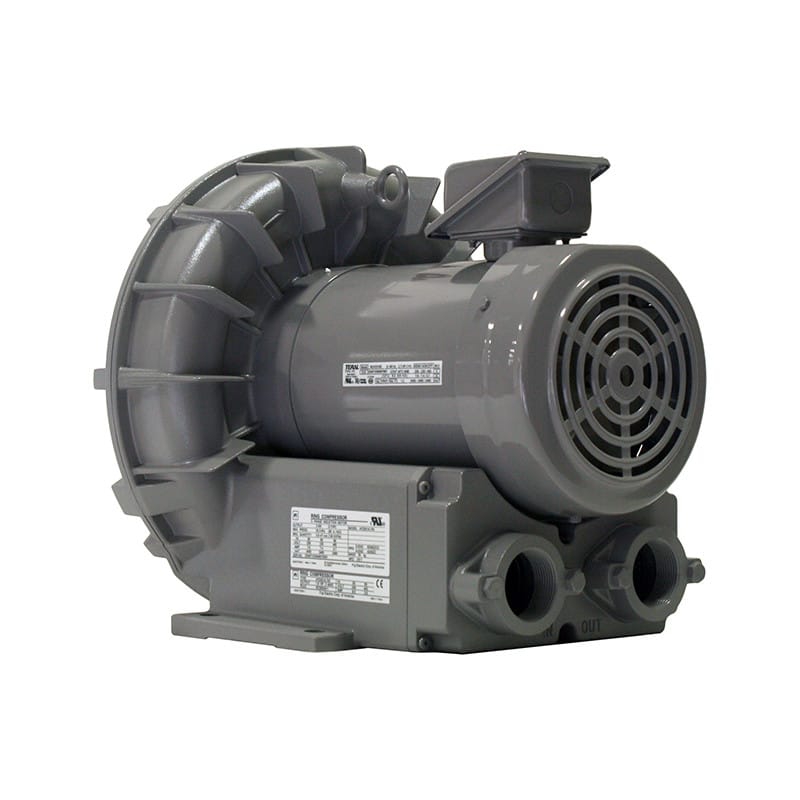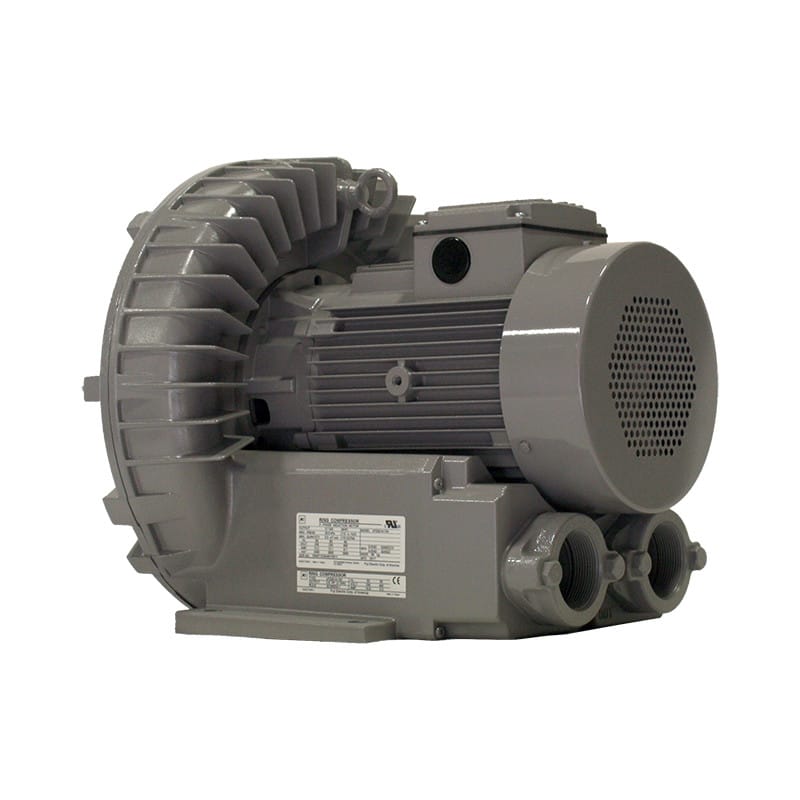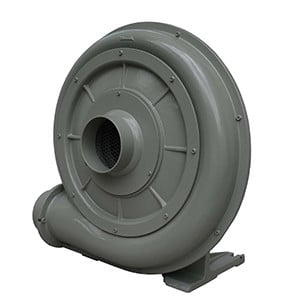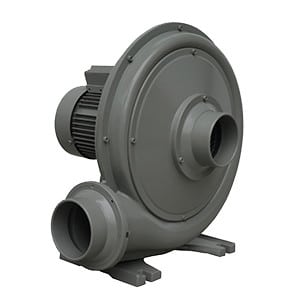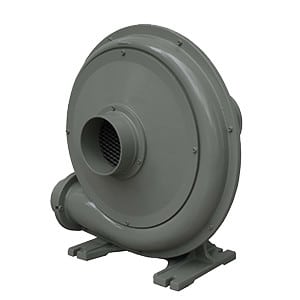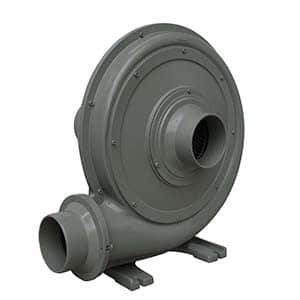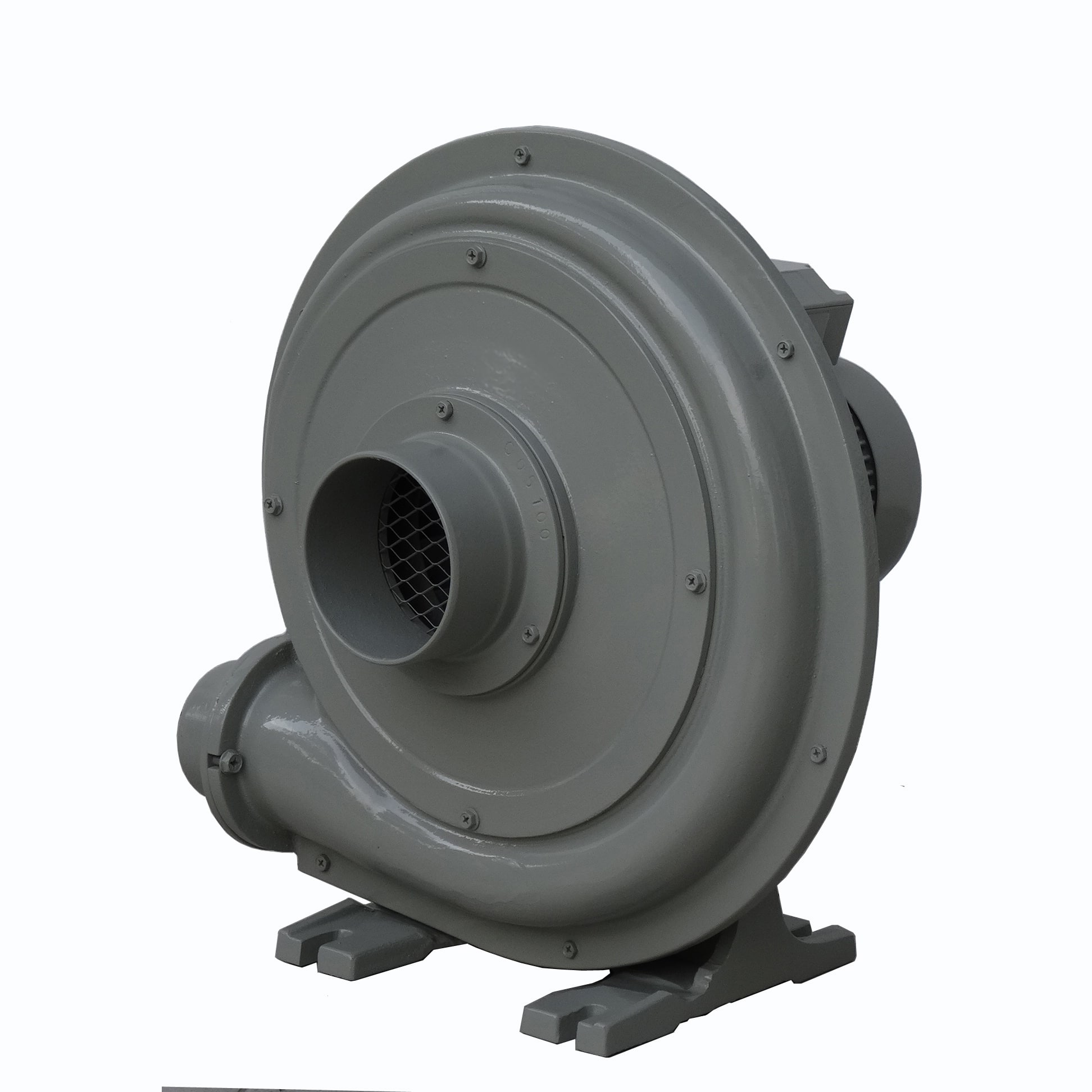

Choosing the right motor for a regenerative (RC) blower is just as important as selecting the blower itself. The motor affects everything from performance and energy efficiency to compatibility with your facility’s electrical system.
- Single-Phase Motors
Voltage: Typically 115V or 230V
Common in: Residential, light commercial, or mobile setups
Advantages:
- Easy to install—standard in most buildings
- Lower initial cost
- Ideal for smaller RC blowers (<2 HP)
Limitations:
- Limited to lower power ratings
- Less efficient than 3-phase motors
- Not suitable for continuous heavy-duty industrial use
Best for:
- Point-of-use suction or airflow in small labs, aquaculture, or compact machines
- Three-Phase Motors
Voltage: Commonly 208V, 230V, 460V, or 575V
Common in: Industrial and commercial facilities
Advantages:
- More efficient and reliable under continuous load
- Handles higher power RC blowers (up to 25 HP+)
- Compatible with variable frequency drives (VFDs) for speed control
Limitations:
- Requires a 3-phase power supply
- Higher upfront cost, but lower operating cost
Best for:
- Industrial vacuum systems, pneumatic conveying, wastewater aeration, packaging equipment
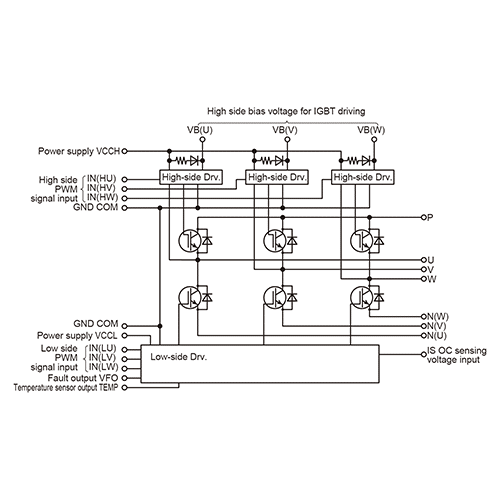
- Variable Frequency Drive (VFD) Compatible Motors
Used with both single- and three-phase motors (often three-phase), VFD-compatible motors allow adjustable blower speed and precise flow control.
Benefits:
- Energy savings through variable speed operation
- Soft start reduces mechanical wear
- Improves blower efficiency across different loads
Best for:
- Systems with fluctuating demand
- Applications where flow modulation is required
- Specialty Motors
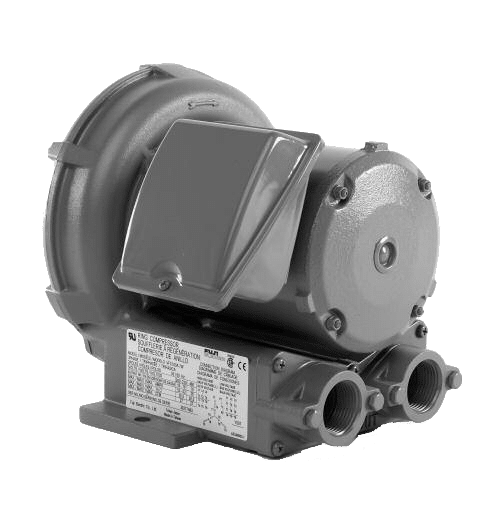
Explosion-Proof Motors
- Required in hazardous locations (e.g., chemical plants)
- UL or ATEX rated for Class I/Div 1 or 2 environments
Washdown Duty Motors
- Sealed and corrosion-resistant
- Used in food & beverage or pharmaceutical applications
IEC or NEMA Configurations
- Match regional standards (NEMA = North America, IEC = international)
How to Choose the Right Motor: Key Considerations
|
Factor |
What to Look For |
|
Available power supply |
Single- or three-phase, voltage level |
|
Duty cycle |
Continuous or intermittent operation |
|
Environment |
Wet, dusty, explosive, or clean room |
|
Required flow/pressure |
Match motor size to blower specs |
|
Control needs |
Fixed speed vs. VFD control |
|
Certifications |
UL, CE, RoHS, ATEX, etc. |
Pro Tip:
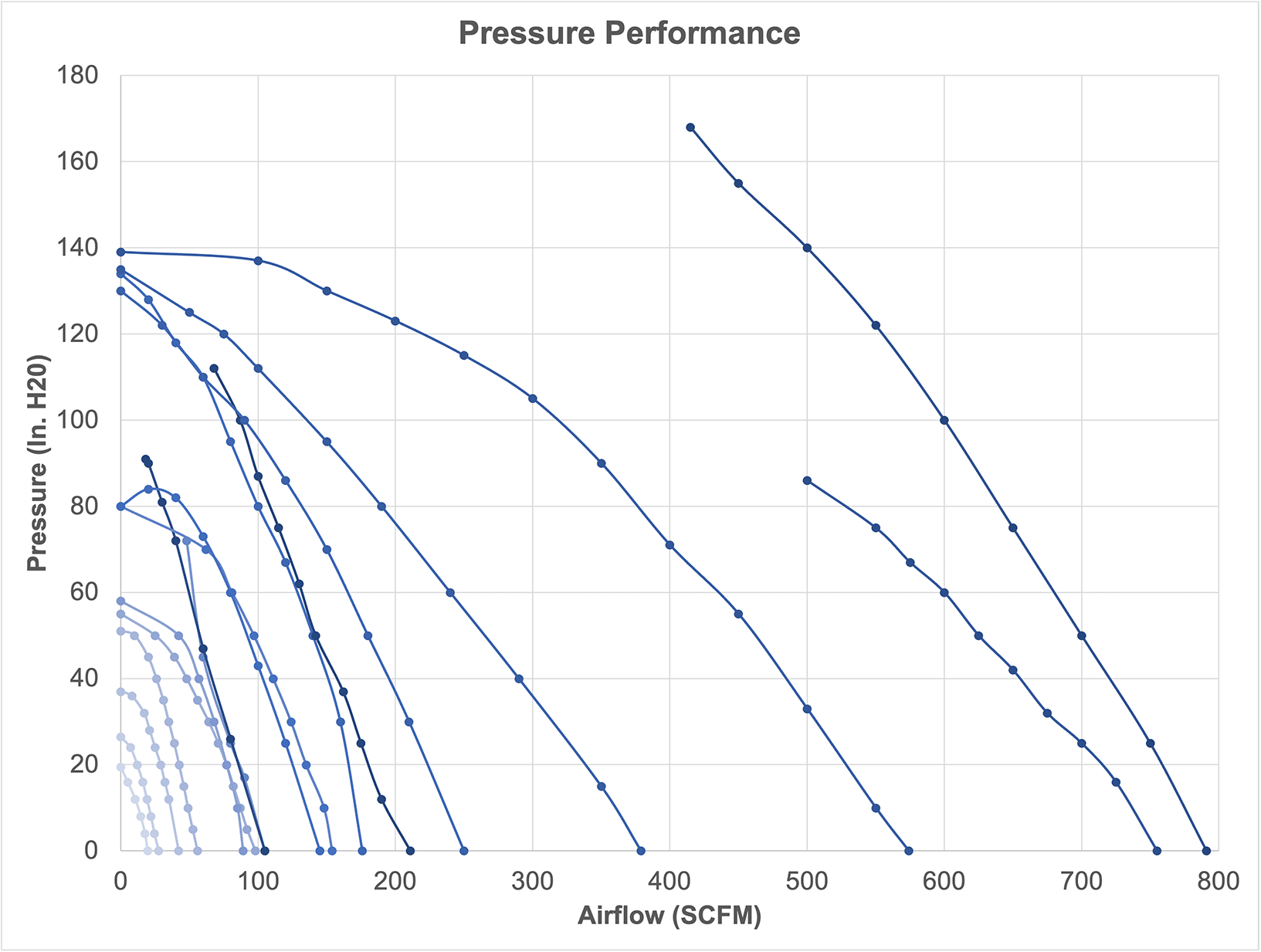
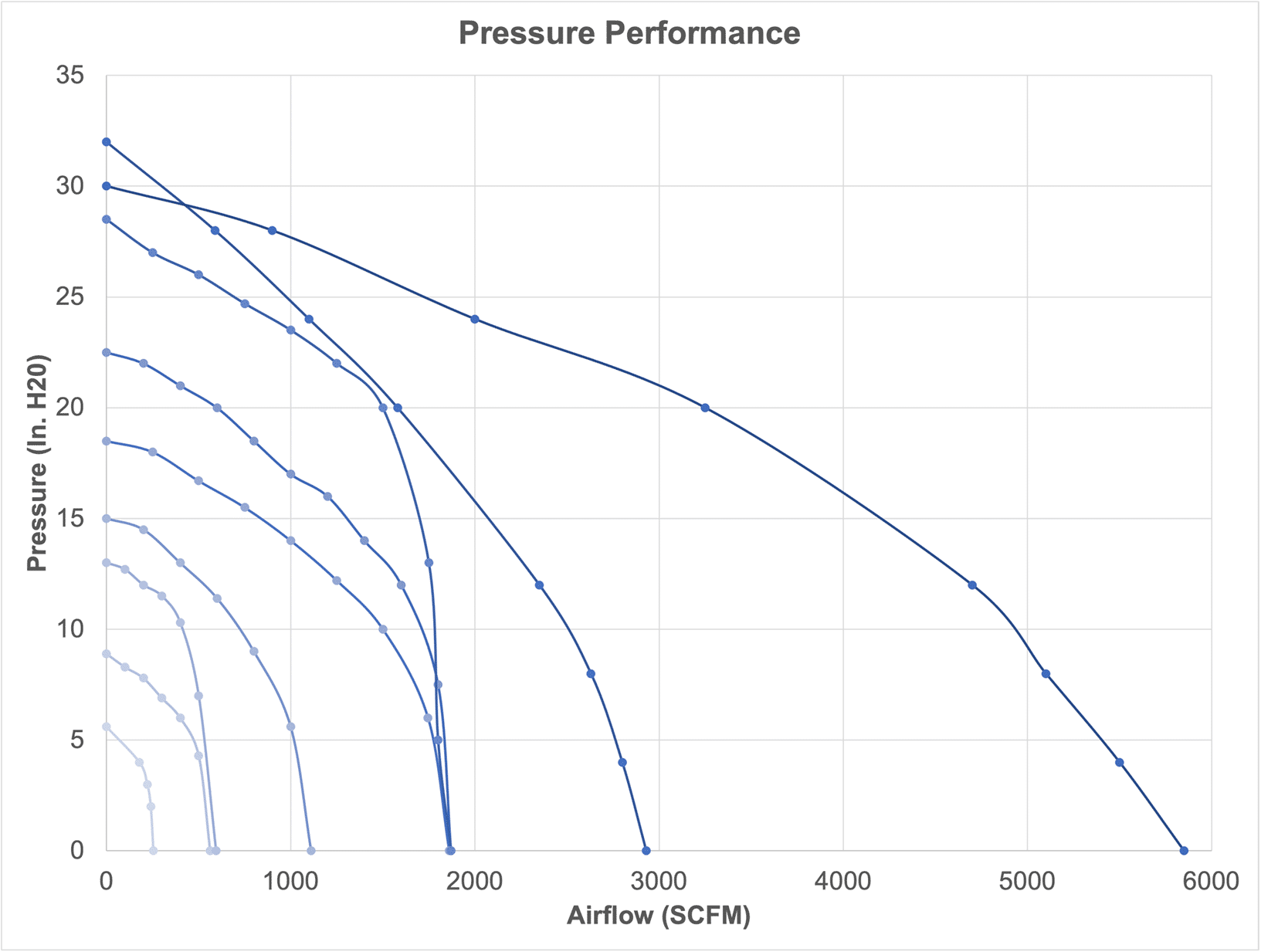
Always consult the blower’s performance curve and motor load chart together to ensure optimal pairing—especially when switching from legacy systems or introducing VFD control.