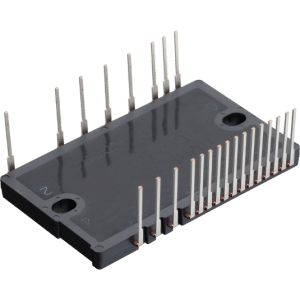

As the demand for smaller, more efficient, and higher-performance power electronics increases—especially in electric vehicles (EVs), renewable energy systems, and industrial drives—IGBT module designs are evolving rapidly. Manufacturers are pushing the limits of power density, thermal performance, and reliability while reducing form factors.
Key Trends in IGBT Module Design
- Higher Power Density
- Advanced packaging techniques allow more IGBT chips in the same footprint.
- Result: Smaller modules delivering the same or higher current.
- Benefits include lighter systems, reduced cooling needs, and better integration into compact systems like EV inverters.
- Dual-Sided Cooling (DSC)
- New module designs feature heat dissipation from both the top and bottom surfaces.
- This dramatically improves thermal resistance and allows higher current throughput.
- Ideal for high-duty-cycle applications like rail traction and commercial EVs.
- SiC and Hybrid Modules
- Many high-density IGBT modules now include SiC diodes or use hybrid Si/SiC technology.
- This improves switching speed, reduces losses, and enables higher frequency operation.
- Result: Smaller filters, smaller heat sinks, and increased system efficiency.
- Sintered Chip Connections
- Replacing traditional soldering with silver sintering increases thermal conductivity and mechanical reliability.
- Reduces thermal fatigue and enables higher temperature operation (Tj > 175°C).
- Particularly useful in mission-critical or automotive applications.
- Integrated Sensing & Protection
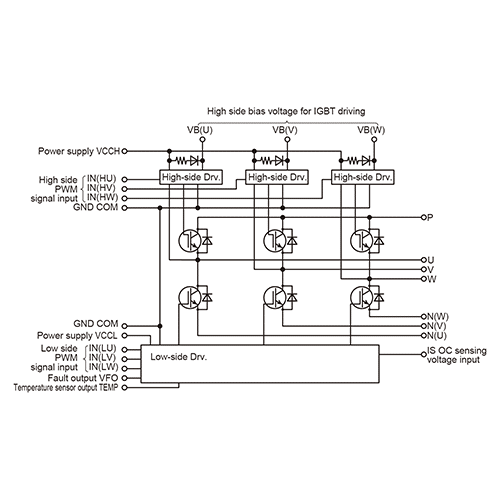
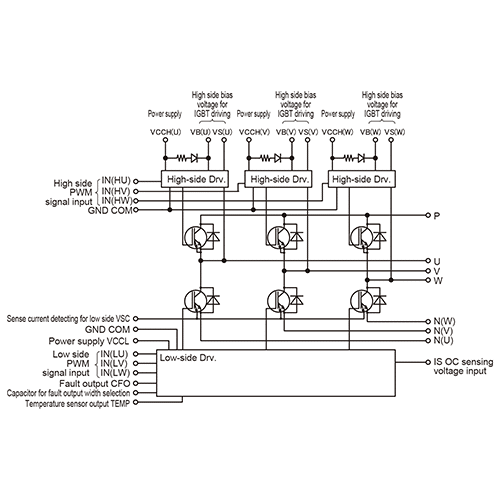
- Modern compact modules integrate temperature sensors, current sensors, and gate drivers.
- Enhances reliability and simplifies external circuitry.
- Smart modules reduce BOM (bill of materials) and system development time.
- Low Inductance Design
- Compact IGBT modules now feature optimized internal layouts to reduce parasitic inductance.
- Important for fast switching and minimizing voltage overshoots.
- Supports stable operation at higher frequencies and tighter EMI margins.
- Modular and Scalable Architectures
- Standardized form factors (e.g., EasyPACK, EconoDUAL, XHP) allow parallel operation and power scaling.
- Simplifies design of high-power systems by using building-block approaches.
- Embedded Gate Driver Technology
- Some high-density modules now come with embedded gate drivers, reducing board space and improving gate control.
- Can include features like active clamping, soft turn-off, and desaturation protection.
Applications Benefiting from These Trends
|
Sector |
Benefits of Compact / High-Density IGBT Modules |
|
EV Inverters |
Smaller size, better heat dissipation, increased driving range |
|
Industrial Drives |
More power in smaller panels, less maintenance |
|
Renewable Energy (e.g., PV, wind) |
Improved inverter efficiency and power throughput |
|
Rail and Traction |
High reliability under thermal and mechanical stress |
|
Data Centers / UPS |
Smaller footprint with high current output and efficiency |
Summary
Compact and high-density IGBT modules represent the next generation of power semiconductors, driven by the need for:
- Greater efficiency and reliability
- Smaller system sizes
- Simplified thermal management
- Intelligent, integrated control
These trends are reshaping the landscape of power conversion, enabling smarter, faster, and more sustainable systems.