
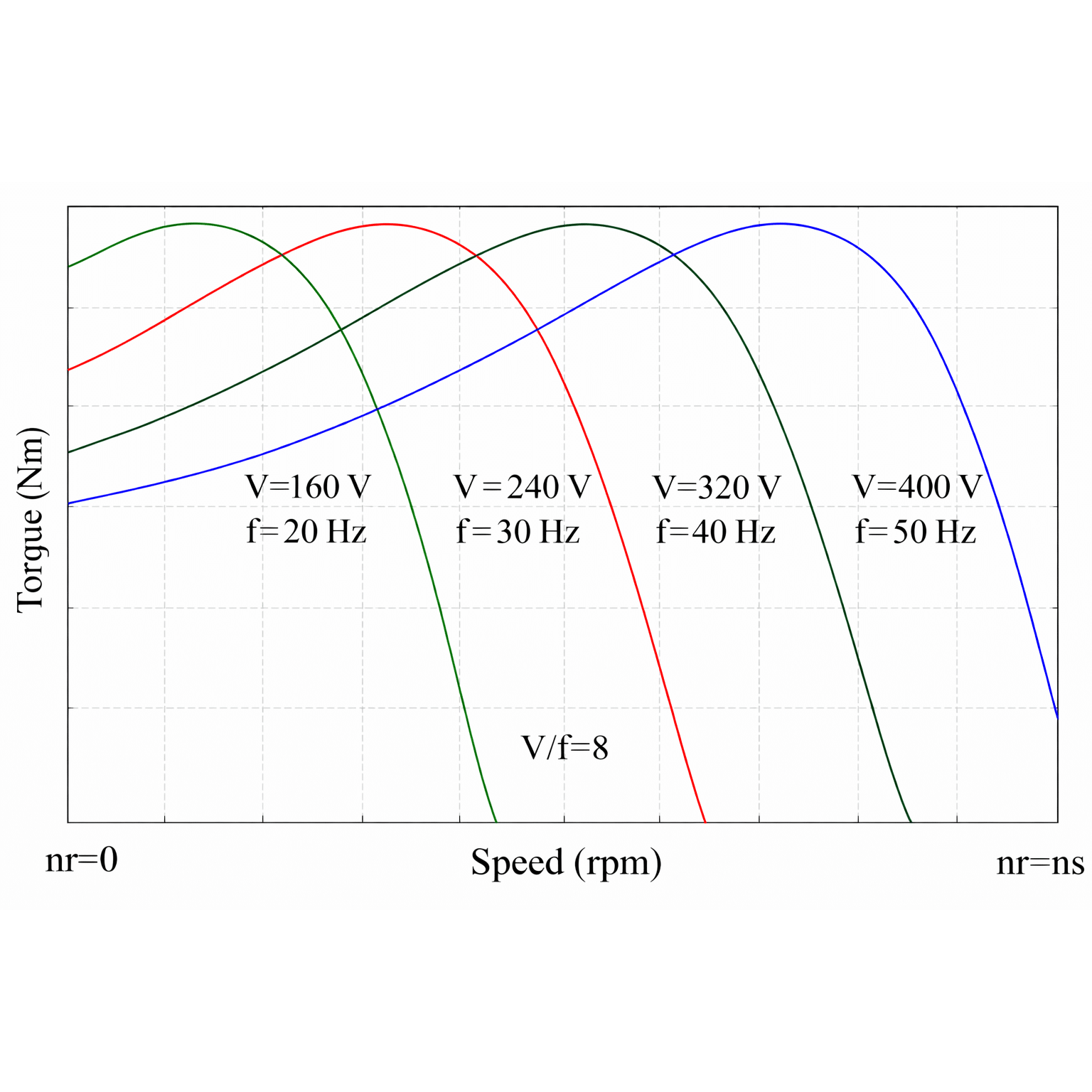
What Is a Torque Curve?
A torque curve shows how much torque (rotational force) a motor or application requires across different speeds. Every type of load—whether it’s a fan, pump, or conveyor—has its own unique torque profile.
At its core:
- Torque = the force needed to rotate a load
- Speed = how fast that load rotates
The relationship between the two determines how your system behaves—and how your VFD should be configured.
The Three Main Types of Torque Loads
- Variable Torque Loads (Fans & Pumps)
- Torque increases with the square of speed
- Power increases with the cube of speed
Examples:
- HVAC fans
- Centrifugal pumps
Why it matters:
This is where VFDs shine. Reducing speed even slightly leads to significant energy savings. Selecting a VFD optimized for variable torque can dramatically cut operating costs.
- Constant Torque Loads (Conveyors & Compressors)
- Torque remains constant regardless of speed
Examples:
- Conveyors
- Positive displacement pumps
- Screw compressors
Why it matters:
These applications require steady force at all speeds. Your VFD must be sized to handle full torque even at low speeds, or you risk stalling and overheating.
- Constant Horsepower Loads (Machine Tools)
- Torque decreases as speed increases
- Horsepower remains constant
Examples:
- Machine tool spindles
- Winder/unwinder systems
Why it matters:
These applications require precise control across a wide speed range. A properly selected VFD ensures smooth transitions and consistent performance.
Why Torque Curves Matter in VFD Selection
- Proper Sizing
Choosing a VFD without understanding torque can lead to:
- Undersized drives → stalling, trips, overheating
- Oversized drives → unnecessary cost
Matching the torque curve ensures the drive delivers the right amount of power exactly when needed.
- Energy Efficiency
Different torque profiles respond differently to speed control:
- Variable torque loads = massive energy savings
- Constant torque loads = more stable, predictable consumption
Understanding this helps maximize ROI from your VFD investment.
- System Reliability
If torque demands aren’t met:
- Motors can overheat
- Drives can trip
- Equipment life is reduced
A properly matched torque profile keeps everything running smoothly and extends system lifespan.
- Control Strategy Optimization
Torque characteristics influence:
- Acceleration and deceleration settings
- Control modes (V/Hz vs vector control)
- Protection parameters
This ensures optimal performance for your specific application.
Common Mistakes to Avoid
- Assuming all loads behave the same
(Fans ≠ conveyors ≠ compressors)
- Ignoring starting torque requirements
Some applications need a torque boost at startup
- Overlooking low-speed performance
Critical for conveyors and heavy loads
- Not accounting for load variations
Real-world conditions often differ from ideal curves
Bringing It All Together
Selecting the right VFD isn’t just about matching voltage and horsepower—it’s about understanding how your system behaves under real operating conditions.
Torque curves provide that insight.
By aligning your VFD selection with your application’s torque profile, you can:
- Improve efficiency
- Enhance reliability
- Reduce operating costs
- Extend equipment life
Final Thought
In today’s push for smarter, more energy-efficient systems, torque curves are more than just engineering theory—they’re a practical tool for better decision-making.
Get the torque right, and everything else follows.